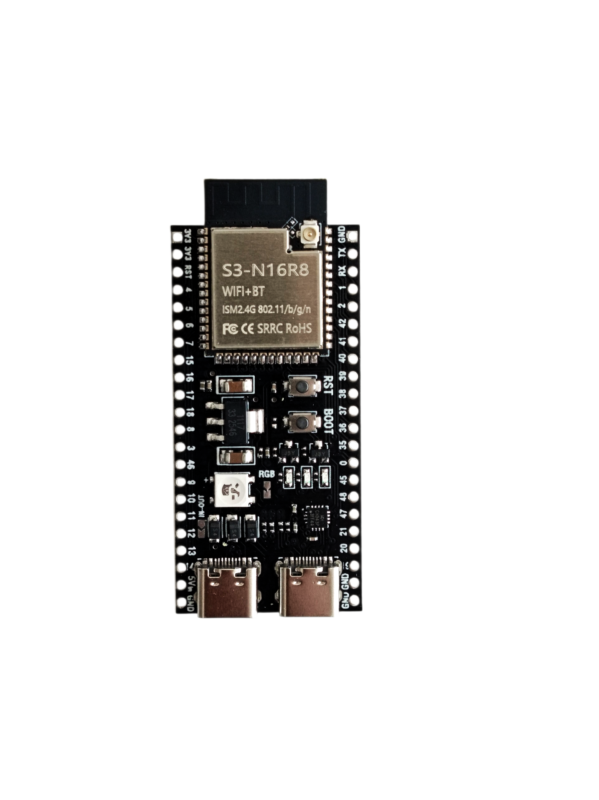
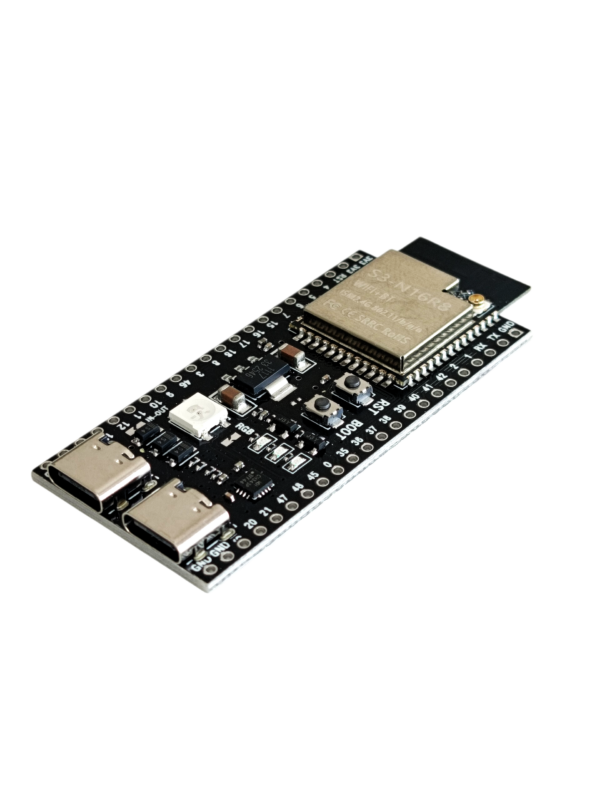
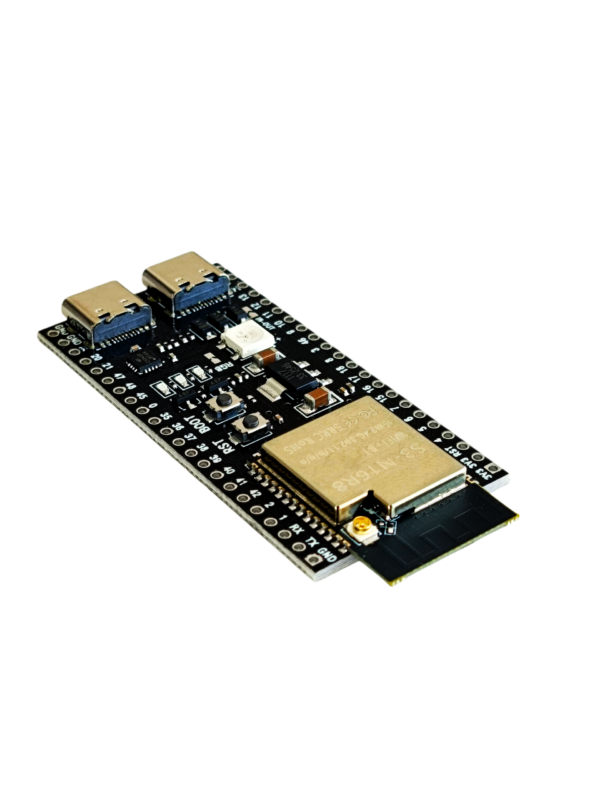
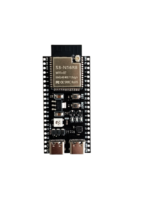
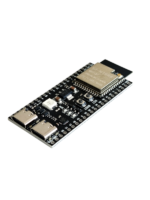
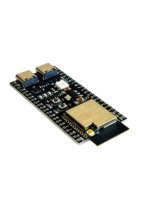
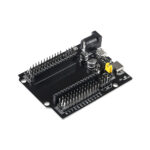
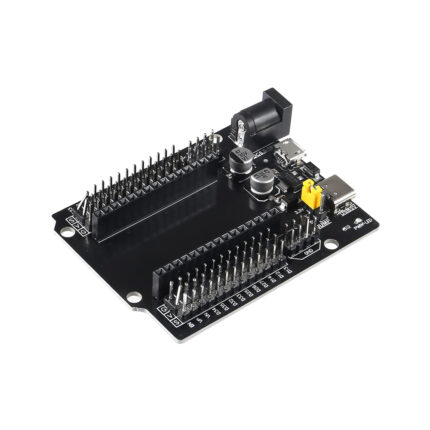
ESP32-S3 N16R8 Dual Type-C Development Board
- Powerful ESP32-S3 dev board with 16MB Flash and 8MB PSRAM
- Dual Type-C ports — one for USB-to-UART programming, one for native USB OTG
- Built-in Wi-Fi and Bluetooth 5.0 (LE) connectivity
- Ideal for AI, camera, and machine-learning edge projects
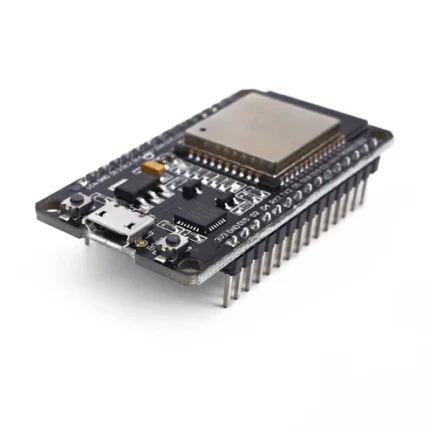
The ESP32-S3-N16R8 Dual Type-C Dev Board is a high-performance development board built around the ESP32-S3 module, featuring a dual-core Xtensa LX7 processor, 16MB of flash memory, and 8MB of PSRAM — giving you ample room for complex firmware, TinyML models, and camera/image-buffer applications. Unlike standard ESP32-S3 boards with a single USB port, this variant includes two Type-C connectors: one wired to a USB-to-UART bridge for straightforward flashing and serial monitoring, and another connected directly to the ESP32-S3’s native USB peripheral, enabling USB OTG, USB HID, or direct USB-to-JTAG debugging. With integrated Wi-Fi, Bluetooth 5 (LE), and a rich set of GPIOs, this board is well-suited for IoT, robotics, edge-AI, and camera-based projects that need more memory headroom and native USB flexibility than a basic ESP32 dev board can offer.
PACKAGE INCLUDES:
- 1 x ESP32-S3-N16R8 Dual Type-C Development Board
| Shipping Weight | 15 g |
|---|
- Edge-AI and TinyML projects requiring extra PSRAM/flash
- Camera-based applications (e.g., ESP32-S3 with OV camera modules)
- USB HID devices, USB OTG, and native USB communication projects
- IoT and home automation systems
- Robotics control boards needing Wi-Fi/Bluetooth connectivity
- Rapid prototyping and firmware debugging via dual USB interfaces
| Parameter | Specification |
|---|---|
| Module | ESP32-S3 (N16R8 variant) |
| CPU | Dual-core Xtensa LX7, up to 240MHz |
| Flash Memory | 16MB |
| PSRAM | 8MB |
| Wireless | Wi-Fi 802.11 b/g/n (2.4GHz) + Bluetooth 5 (LE) |
| USB Ports | Dual Type-C — 1x USB-UART (programming), 1x Native USB (OTG/JTAG) |
| GPIO Pins | 40+ pins broken out (varies by board layout) |
| Operating Voltage | 3.3V (5V input via USB) |
| Onboard Features | Reset & Boot buttons, power/status LEDs |
| Camera Interface | Supported (via GPIO, board-dependent) |
| Programming | Arduino IDE, ESP-IDF, MicroPython compatible |
| Dimensions | Varies by manufacturer (typically ~25mm x 55mm to 70mm) |
Reviews
There are no reviews yet.