Arduino vs ESP32 – Which Board Should You Buy?
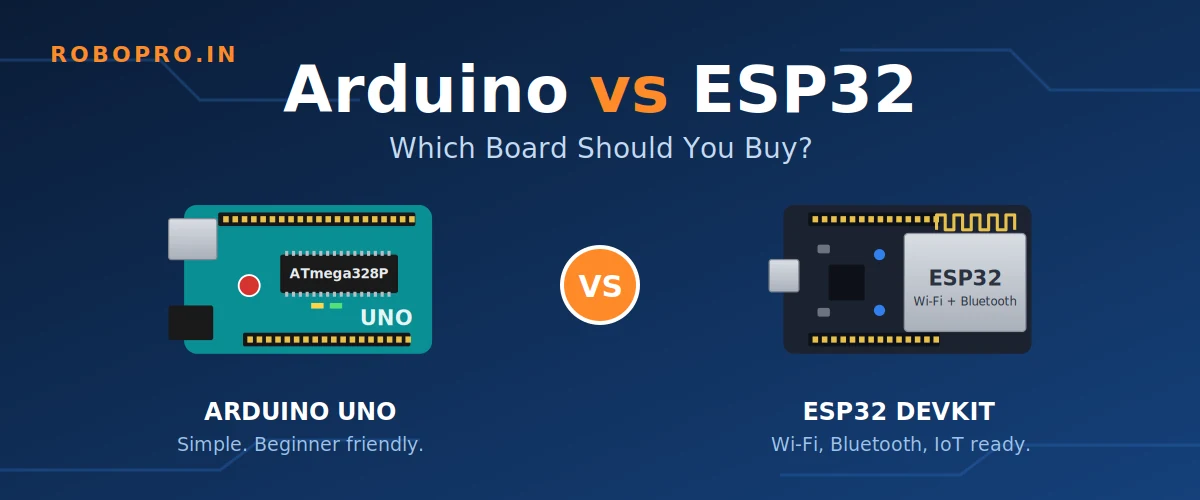
When starting an electronics, robotics, or IoT project, choosing the right development board is one of the most important decisions. Two of the most popular boards among students, hobbyists, and makers are Arduino and ESP32.
Both boards are powerful, affordable, and widely used for learning and project development. However, they are designed for different applications. Arduino is known for simplicity and beginner-friendly programming, while ESP32 offers advanced features such as built-in Wi-Fi and Bluetooth.
This guide will help you understand the differences between Arduino and ESP32 and choose the right board for your project.
What is Arduino?
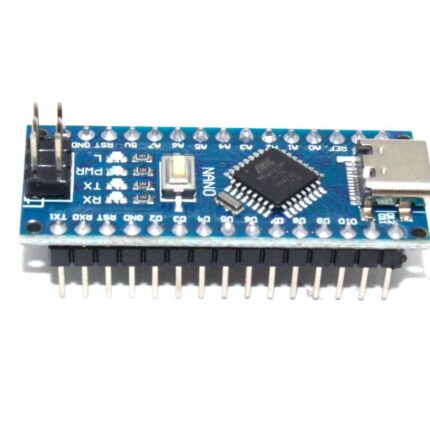
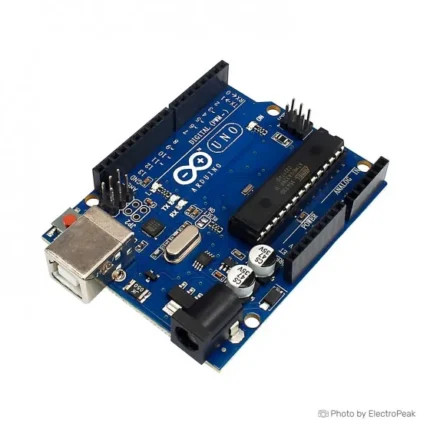
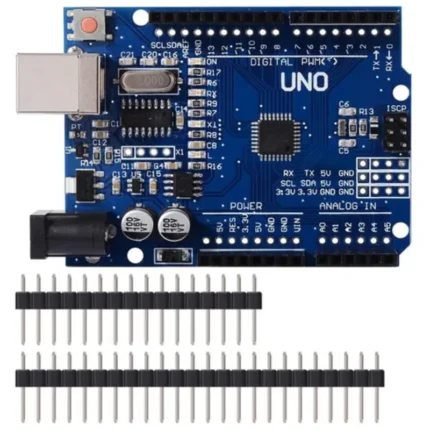
Arduino is an open-source electronics platform designed to make microcontroller programming easy for beginners. It is widely used in schools, colleges, robotics training, and DIY electronics projects.
The most popular Arduino board is:
- Arduino Uno R3
Other popular boards include:
- Arduino Nano
- Arduino Mega 2560
- Arduino Leonardo
- Arduino Pro Mini
Arduino boards are excellent for learning:
- Basic electronics
- Programming concepts
- Sensors
- Motors
- Robotics fundamentals
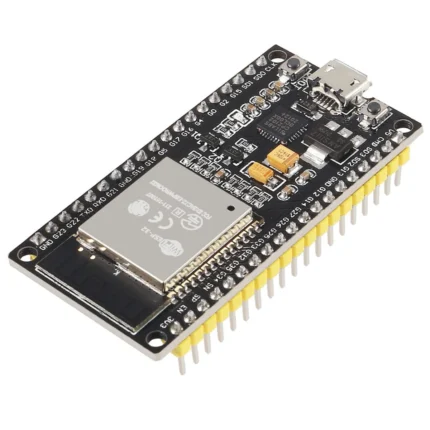
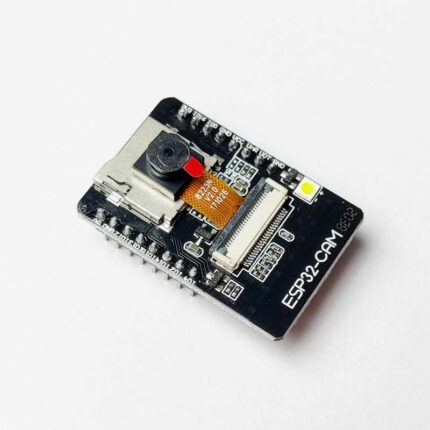
What is ESP32?
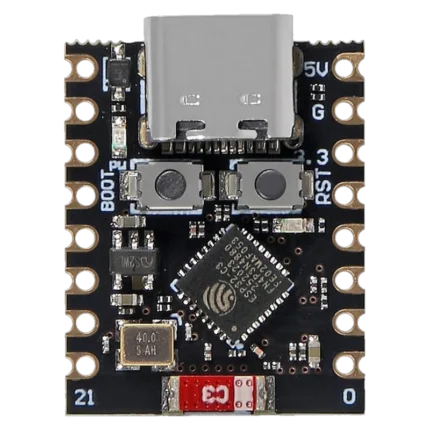
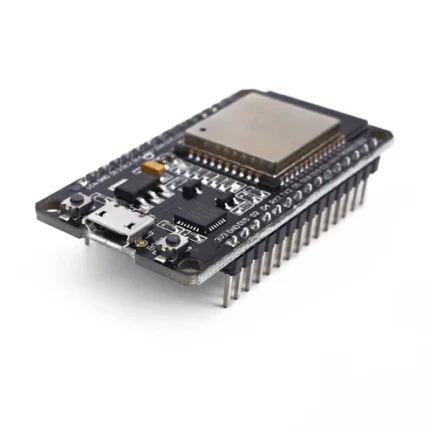
ESP32 is a powerful microcontroller development board designed for advanced electronics and IoT applications.
It includes built-in:
- Wi-Fi connectivity
- Bluetooth communication
- More processing power
- More input/output pins
- Advanced features for smart devices
ESP32 is commonly used for:
- IoT projects
- Smart home automation
- Wireless monitoring systems
- Wearable devices
- AI and sensor-based applications
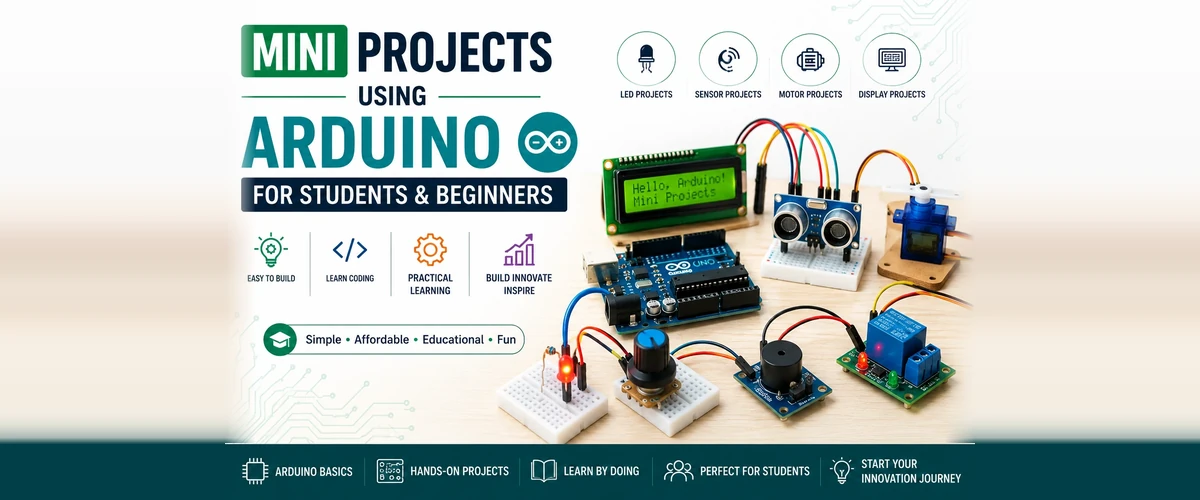
Arduino vs ESP32 Comparison
| Feature | Arduino Uno | ESP32 |
|---|---|---|
| Processor | ATmega328P | Dual-core Xtensa processor |
| Clock Speed | 16 MHz | Up to 240 MHz |
| Operating Voltage | 5V | 3.3V |
| Wi-Fi | Not available | Built-in Wi-Fi |
| Bluetooth | Not available | Built-in Bluetooth |
| GPIO Pins | 14 Digital Pins | 30+ GPIO Pins (varies by board) |
| Analog Inputs | 6 | Multiple ADC channels |
| Programming | Arduino IDE | Arduino IDE / MicroPython |
| Beginner Friendly | Excellent | Good |
| IoT Applications | Limited | Excellent |
| Processing Power | Basic | Advanced |
Advantages of Arduino
1. Easy for Beginners
Arduino has a simple programming environment and a large community of learners. Beginners can quickly build their first projects.
2. Huge Learning Resources
There are thousands of tutorials, examples, and project ideas available for Arduino.
3. Large Range of Compatible Modules
Arduino supports many modules such as:
- Ultrasonic sensors
- Temperature sensors
- Motor drivers
- LCD displays
- Relay modules
- RFID modules
4. Best for Learning Electronics
Arduino is ideal for understanding:
- Digital and analog signals
- Circuit connections
- Basic programming logic
- Sensor interfacing
Advantages of ESP32
1. Built-in Wi-Fi and Bluetooth
ESP32 can directly connect to:
- Mobile applications
- Cloud platforms
- IoT dashboards
- Wireless networks
2. Higher Performance
ESP32 provides much faster processing compared to traditional Arduino boards.
3. Perfect for IoT Projects
ESP32 is suitable for:
- Smart home systems
- Remote monitoring
- Smart agriculture
- Cloud-connected devices
4. More Advanced Features
ESP32 supports:
- Touch sensors
- Multiple communication protocols
- Wireless communication
- Advanced automation applications
Arduino Projects
Arduino is best suited for:
- LED projects
- Traffic light models
- Automatic irrigation systems
- Line follower robots
- Obstacle avoiding robots
- Smart dustbins
- Basic automation projects
- Science exhibition models
ESP32 Projects
ESP32 is ideal for:
- Wi-Fi-controlled home automation
- IoT weather stations
- Smart agriculture monitoring
- Wireless robotics
- Web server projects
- Bluetooth-controlled devices
- Remote sensor monitoring
Which Board Should Beginners Buy?
For School Students (Classes 5–10)
Recommended: Arduino Uno
Reasons:
- Easier to understand
- Beginner-friendly programming
- Large number of learning projects
- Excellent for STEM education
Students can learn:
- Electronics basics
- Sensors
- Motors
- Robotics concepts
For College Students and IoT Projects
Recommended: ESP32
Reasons:
- Built-in connectivity
- Higher processing power
- Suitable for advanced projects
- Better for real-world applications
For Robotics Learning
Both boards are useful:
Start with Arduino to learn basics, then move to ESP32 for advanced wireless robotics projects.
Arduino or ESP32 – Final Recommendation
Choose Arduino if you are:
- A beginner learning electronics
- Building school projects
- Learning programming fundamentals
- Creating basic robotics projects
Choose ESP32 if you are:
- Building IoT projects
- Need Wi-Fi or Bluetooth
- Creating smart devices
- Working on advanced automation
The best learning path for students is:
- Arduino → Sensors → Robotics → ESP32 → IoT → AI Projects
Arduino and ESP32 Boards at Robopro.in
At Robopro.in, students, hobbyists, and engineers can find Arduino boards, ESP32 development boards, sensors, modules, robotics components, and STEM learning kits.
Our products help learners build projects in:
- Robotics
- IoT
- Embedded systems
- Automation
- Artificial Intelligence
- STEM education
Whether you are starting your first electronics project or developing an advanced IoT system, Robopro.in provides the components needed to bring your ideas to life.
Conclusion
Arduino and ESP32 are both excellent development boards, but the right choice depends on your project requirements.
Arduino is the perfect starting point for beginners, while ESP32 is the better choice for connected and advanced applications. Learning both platforms gives students a strong foundation in electronics, programming, robotics, and future technologies.