

Top 20 STEM Projects for School Students

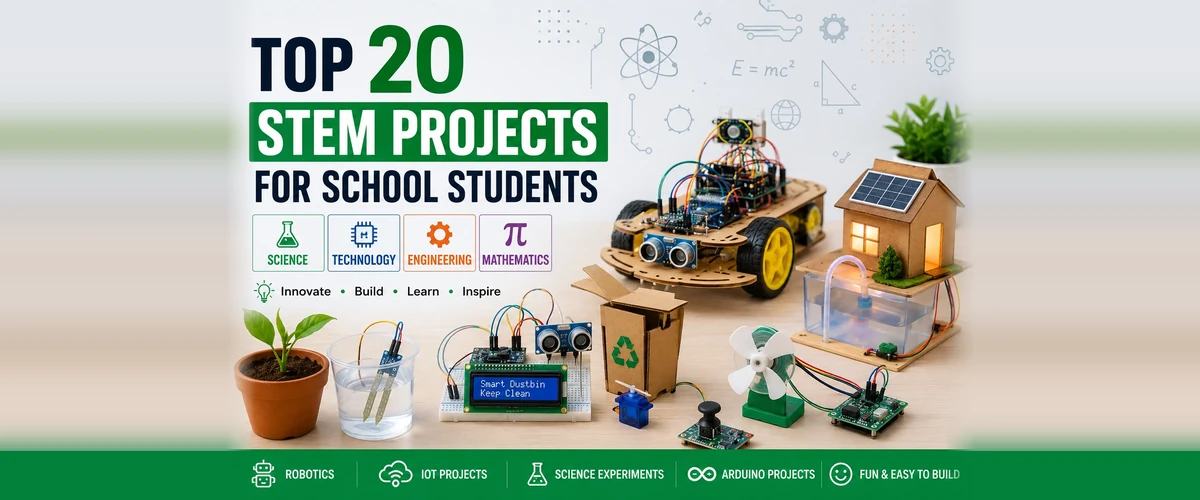
STEM education helps students develop creativity, critical thinking, problem-solving skills, and technical knowledge through hands-on learning. STEM projects combine Science, Technology, Engineering, and Mathematics to help students understand how real-world systems work.
Building practical projects is one of the best ways to learn beyond textbooks. Robotics, electronics, coding, and automation projects make learning interactive. Beginners can also start with these mini projects using Arduino.
Here are the Top 20 STEM project ideas for science exhibitions, STEM activities, and classroom learning.
Automatic Irrigation System
An automatic irrigation system uses a soil moisture sensor to detect soil conditions and automatically controls water supply to plants.
- Sensors
- Automation
- Agriculture technology
- Water conservation
- Arduino programming
- Smart farming
- Home gardening
- Greenhouse automation
Obstacle Avoiding Robot
Build a robot that detects obstacles using ultrasonic sensors and changes direction automatically.
- Robotics
- Sensors
- Motor control
- Programming logic
- Arduino
- Ultrasonic sensor
- Motor driver
- Robot chassis
Line Follower Robot
A line follower robot uses infrared sensors to follow a predefined path.
- Robotics
- Automation
- Sensor technology
- Control systems
- Industrial robots
- Autonomous vehicles
- Robotics competitions
Smart Home Automation System
Create a model smart home where appliances can be controlled automatically or through a mobile application.
- Internet of Things (IoT)
- Wireless communication
- Automation
- ESP32/Arduino
- Relay module
- Sensors
- Bluetooth/Wi-Fi
Smart Dustbin Using Sensors
A smart dustbin automatically opens its lid when a person approaches.
- Ultrasonic sensing
- Servo motor control
- Automation
- Smart cities
- Hygiene systems
Weather Monitoring Station
Build a system that measures temperature, humidity, and environmental conditions.
- Data collection
- Sensors
- Environmental science
- IoT
- DHT11/DHT22
- Temperature sensors
- Air quality sensors
Solar Energy Power System
Create a working model demonstrating renewable energy generation using solar panels.
- Renewable energy
- Electrical circuits
- Sustainable technology
- Solar homes
- Green energy systems
Water Level Indicator
Design a system that detects water levels and provides alerts.
- Water sensing
- Electronics
- Automation
- Tank monitoring
- Water conservation
Fire Detection Alarm System
Build a safety system that detects fire or smoke and activates an alarm.
- Safety technology
- Sensors
- Electronic circuits
- Flame sensor
- Smoke sensor
- Buzzer
Smart Traffic Management System
Create a traffic signal model that uses sensors to manage vehicle movement.
- Smart cities
- Automation
- Embedded systems
- Traffic control
- Urban planning
RFID Smart Attendance System
Create an automated attendance system using RFID cards.
- Wireless identification
- Data management
- Automation
- Schools
- Offices
- Security systems
Voice-Controlled Home Automation
Control lights and appliances using voice commands.
- Artificial intelligence
- Voice recognition
- IoT
- Smart homes
- Assistive technology
Smart Plant Monitoring System
Monitor plant health using sensors and display real-time information.
- Soil moisture
- Temperature
- Humidity
- Smart gardening
- Agriculture monitoring
Bluetooth-Controlled Robot
Build a robot controlled using a smartphone.
- Bluetooth communication
- Robotics
- Mobile control
- Arduino
- HC-05 Bluetooth module
- Motor driver
Automatic Street Light System
Create a street light model that turns ON automatically during darkness.
- Light sensing
- Energy conservation
- Automation
- LDR sensor
- LEDs
- Microcontroller
Smart Parking System
Develop a parking model that detects available parking spaces.
- Sensors
- Automation
- Smart city technology
- Parking management
- Vehicle monitoring
Air Pollution Monitoring System
Build a device that measures air quality using sensors.
- Environmental monitoring
- Data analysis
- Sensor technology
- MQ gas sensors
- Dust sensors
AI Object Detection System
Create an AI-based system that identifies objects using a camera.
- Artificial intelligence
- Machine learning
- Computer vision
- Raspberry Pi
- Camera module
Robotic Arm Using Servo Motors
Build a robotic arm that can pick and move objects.
- Mechanical design
- Motor control
- Robotics
- Industrial automation
- Robotics research
IoT-Based Smart Agriculture System
Develop a smart farming system that monitors crops remotely.
- IoT
- Sensors
- Data monitoring
- Automation
- Soil monitoring
- Automatic irrigation
- Weather tracking
Benefits of STEM projects for students
STEM learning with Robopro.in
At Robopro.in, students can explore robotics, electronics, IoT, and STEM learning through practical project kits and components. Pick a category to start building:
Ready to build your STEM project?
Robopro.in helps students transform ideas into working projects through hands-on learning. Schools and STEM labs can also order in bulk.
Conclusion
STEM projects encourage students to become creators, innovators, and problem-solvers. By building real-world models using electronics, robotics, and programming, students gain valuable skills that prepare them for future technologies.
Starting with simple STEM projects can inspire the next generation of engineers, scientists, and technology innovators.