

What is the Internet of Things (IoT)?

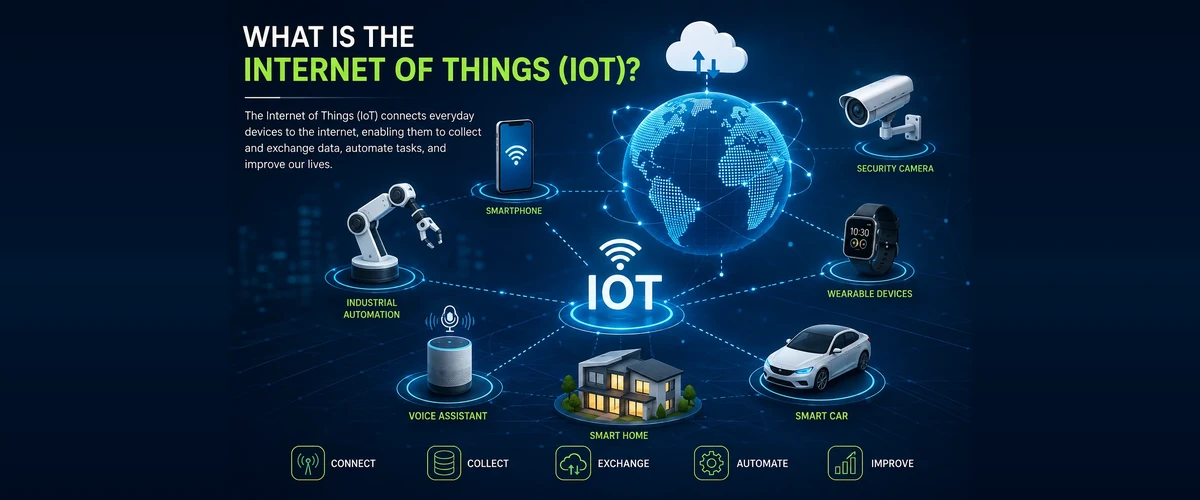
The Internet of Things (IoT) is one of the most important technologies transforming the way we live, work, and interact with devices. IoT connects everyday objects to the internet, allowing them to collect data, communicate with each other, and perform intelligent actions automatically.
From smart homes and wearable devices to smart agriculture and industrial automation, IoT is creating a more connected and efficient world.
For students, learning IoT provides an opportunity to understand how sensors, electronics, programming, and communication technologies work together to build smart solutions.
What is IoT?
The Internet of Things refers to a network of physical devices connected to the internet that can collect, exchange, and process information.
These devices can include:
- Sensors
- Smart appliances
- Robots
- Vehicles
- Industrial machines
- Wearable devices
- Security systems
Each IoT device usually contains:
- Sensors to collect information
- A microcontroller or computer to process data
- Communication modules to send and receive information
- Software to analyze and control actions
How Does IoT Work?
An IoT system generally works through four main steps:
1. Data Collection
Sensors collect information from the environment.
Examples:
- Temperature sensor measures heat
- Soil moisture sensor checks soil condition
- Motion sensor detects movement
- Gas sensor detects harmful gases
2. Data Processing
A controller processes the collected information.
Common controllers include:
- Arduino
- ESP32
- Raspberry Pi
- Microcontrollers
3. Communication
The device sends information through communication technologies such as:
- Wi-Fi
- Bluetooth
- GSM
- LoRa
- Ethernet
4. Smart Action
Based on the collected data, the system performs actions automatically.
Examples:
- Turning on lights
- Starting a water pump
- Sending alerts
- Controlling appliances
Real-Life Examples of IoT
1. Smart Home
IoT allows homeowners to control and automate devices.
Examples:
- Smart lights
- Smart fans
- Smart locks
- Security cameras
- Voice-controlled devices
Benefits:
- Energy saving
- Convenience
- Improved security
2. Smart Agriculture
IoT is transforming farming by helping farmers monitor crops and resources.
Applications:
- Automatic irrigation systems
- Soil monitoring
- Weather monitoring
- Greenhouse automation
Benefits:
- Saves water
- Improves crop productivity
- Reduces manual work
3. Healthcare IoT
Connected healthcare devices help monitor patient conditions.
Examples:
- Smart watches
- Heart rate monitors
- Remote health monitoring systems
Benefits:
- Real-time health tracking
- Faster response
- Better patient care
4. Smart Cities
IoT helps cities become more efficient and sustainable.
Applications:
- Smart traffic management
- Smart street lights
- Waste management systems
- Environmental monitoring
5. Industrial IoT (IIoT)
Industries use IoT for automation and monitoring.
Applications:
- Machine monitoring
- Predictive maintenance
- Production tracking
- Industrial automation
Components Used in IoT Projects
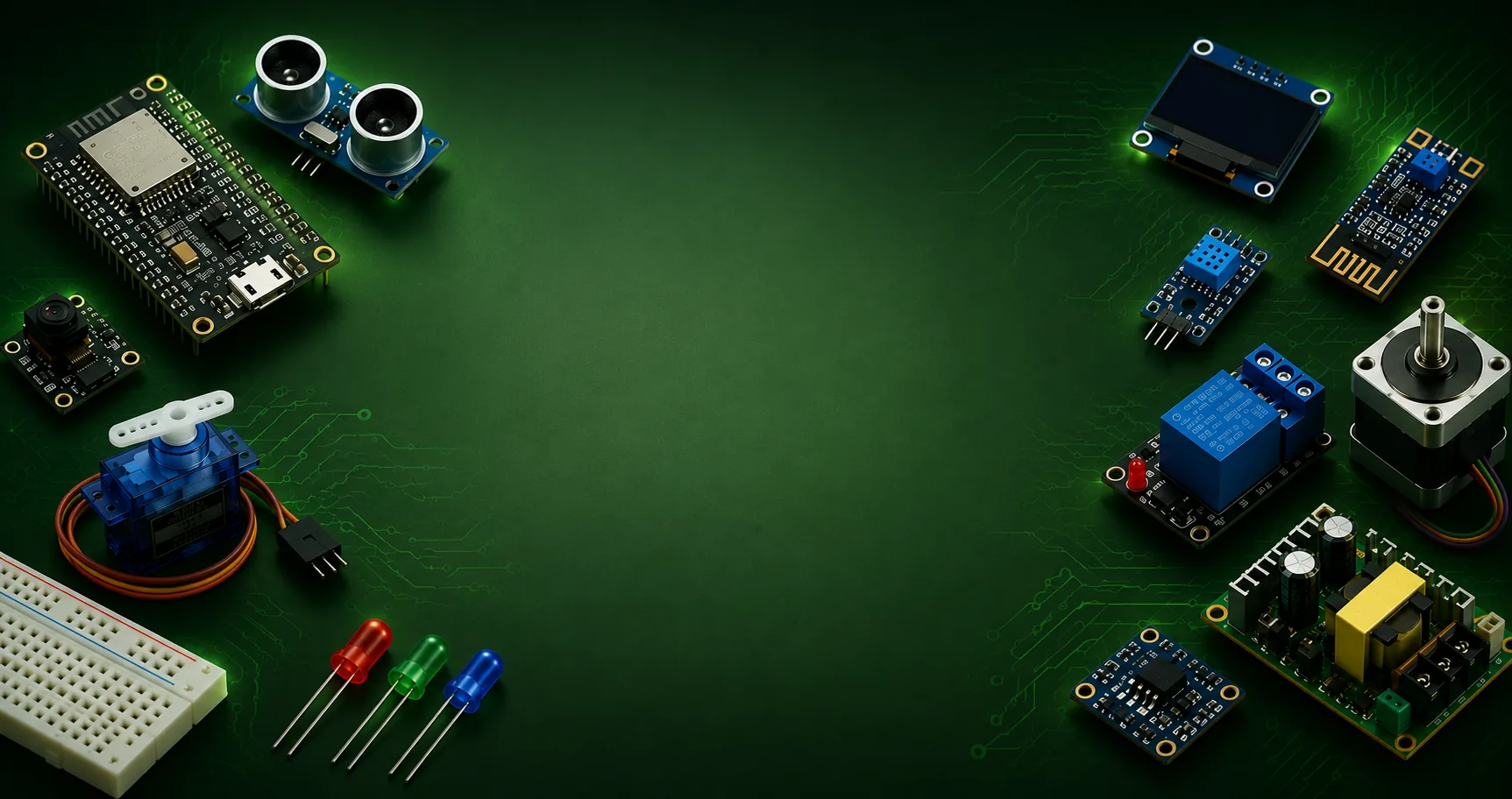
Students and beginners can build IoT projects using:
- Development Boards
- ESP32
- ESP8266
- Arduino
- Raspberry Pi
- Sensors
- Temperature sensor
- Humidity sensor
- Soil moisture sensor
- Ultrasonic sensor
- PIR motion sensor
- Gas sensor
- Light sensor
- Communication Modules
- Wi-Fi modules
- Bluetooth modules
- GSM modules
- LoRa modules
- Output Devices
- LEDs
- Motors
- Relay modules
- Displays
- Buzzers
Beginner IoT Project Ideas
1. Smart Plant Monitoring System
Monitor plant health using:
- Soil moisture sensor
- Temperature sensor
- ESP32/Raspberry Pi
2. Automatic Irrigation System
Automatically water plants when soil becomes dry.
3. Smart Home Automation
Control lights and appliances using a smartphone.
4. Weather Monitoring Station
Measure:
- Temperature
- Humidity
- Air quality
5. Smart Security System
Detect motion and send alerts using connected sensors.
6. IoT-Based Water Level Monitoring
Monitor tank water levels and control pumps automatically.
IoT vs Traditional Electronics
| Traditional Electronics | IoT Systems |
|---|---|
| Works locally | Connected through internet |
| Limited automation | Smart automated decisions |
| Data is not shared remotely | Data can be monitored anywhere |
| Basic control systems | Intelligent connected systems |
Why Students Should Learn IoT
IoT education helps students develop skills in:
- Electronics
- Programming
- Sensors
- Networking
- Cloud technology
- Automation
- Problem-solving
IoT knowledge is useful for future careers in:
- Robotics
- Artificial Intelligence
- Embedded systems
- Smart manufacturing
- Agriculture technology
- Healthcare technology
IoT Learning Path for Beginners
Step 1: Learn Electronics Basics
Understand:
- Circuits
- Sensors
- Components
- Microcontrollers
Step 2: Learn Programming
Start with:
- Arduino programming
- Python
- Embedded C basics
Step 3: Build Sensor Projects
Practice with:
- Temperature sensors
- Motion sensors
- Distance sensors
Step 4: Learn Connectivity
Explore:
- Wi-Fi
- Bluetooth
- Cloud platforms
Step 5: Build Advanced IoT Applications
Move towards:
- Smart homes
- AI-based IoT
- Industrial automation
Learn IoT with Robopro.in
At Robopro.in, students, hobbyists, and engineers can explore IoT learning through development boards, sensors, modules, robotics components, and STEM project kits.
Our products help learners build practical projects in:
- Internet of Things
- Robotics
- Automation
- Embedded systems
- Smart agriculture
- Artificial Intelligence
From beginner sensor experiments to advanced connected devices, Robopro.in supports hands-on technology learning.
Conclusion
The Internet of Things is changing the way devices communicate and work together. By connecting sensors, computers, and everyday objects, IoT creates smarter solutions that improve efficiency and convenience.
Learning IoT at an early age helps students develop future-ready skills in electronics, programming, and innovation. With simple projects using Arduino, ESP32, and Raspberry Pi, students can begin their journey into the exciting world of connected technology.